Saturday, November 10, 2007

Show and Tell

A few days ago, one of the leaders in the CTM network came over for a meeting. We strayed heavily from our agenda and I showed him an article about his community that someone had sent me. He read it, felt that it was very accurate and asked if I had any photos of my family on the computer.

One thing led to another and I showed him photos from the last two years of my life. It never dawned on me until then how difficult it is to tell an accurate story with photos across cultural barriers. Think of the things that we take pictures of and how this might be interpreted by others. It forced me to think hard about the story that my photo album tells and how inaccurate (or maybe accurate) it might be perceived by another. Here are a few examples that required some serious explanation:

  • Backpacking with my dad and brother in Colorado: “You mean to tell me that you flew on a plane to a different state (country in many people's context) to walk for 4 days and stay in a tent when you have a nice home that you can stay in?”

  • A “decorated” car after our wedding: “People put paint on your car, fill it with balloons and tie cans to it...on your wedding day and you aren't supposed to get mad?”

  • Ugly Christmas sweater competition at work: “You go out and buy the ugliest sweater that you can in order to beat out your coworkers? Will you wear it again? Wouldn't you rather wear your other clothes...like the shirt that you have on-that one looks much better.”

  • Tubing behind the boat in the Puget Sound: “What is the boat for? Do you use it to get places? Why do some people ride on a tube? Is there not enough room for them in the boat?”

  • On the magnitude of wedding photos: “What are you going to do with thousands of wedding pictures? Do you print them? Then what? Why do you smash cake on Mandy's face when you are wearing nice clothes. Did she get mad at you?”

  • On the entire collection: “Are these all from you country?” Oceans, lakes, mountains, sand dunes, cities, flowers, fall leaves-not something that people are used to seeing every day.

  • My folks house in Michigan: “Where are the other houses? Do people pay to visit? Does anyone stay in the covered area in the front? (the porch)”

It was an interesting process. One that challenged me, made me laugh and made me somewhat embarrassed to know that many of the people that I interact with here would not be able to identify with many of the experiences that have made me who I am.


Friday, November 2, 2007

An excellent article explaining the situation in Nairobi

I came across this the other day on Africa Online when doing some research on one of the communities that we are working in. It is well written and inline with so many of the feelings that we have been experiencing...


On a quick note, we are doing well. We had a great week and a lot of cool stuff is going on. A few of the highlights that we will ellobrate more on include...Mandy getting a job, moving forward in Mathare-one of the neglected slums of Nairobi and gearing up for some cool stuff happening in February!


By: Gathoni

Give a man a fish he feeds for a day, teach the man to fish and he feeds for a lifetime. The most complex problems in a society can be sometimes be solved by simple ideas and concepts based in old proverbs. It is time we realized that the solution to poverty is not handouts in whatever form they may come, but sustainable long-term solutions that benefit all Kenyans equally. If those in power and those who have the responsibility to vote would take heed to these wise words, the poverty problem would not be what it is today.

The economy may be on the increase and several sectors resuscitated, however the reality is; although the number of those living in areas like Runda and other wealthy suburbs is on the increase, so are those living in Kibera, Mathare Kangemi and other sprawling slums. Even with the increase in fuel prices, it seems that more and more Kenyans are able to afford cars despite the limited infrastructure as is seen with Hummers and other luxurious cars that litter the Nairobi roads during rush hour.

It would be my biggest recommendation for all Kenyans to walk through areas like Kibera and Mathare; I am not talking about slum tourism where their lifestyle is exploited at their expense. What I wish is a simple walk, a mile perhaps in their shoes. Imagine living with millions of other people in approximately 3 sq km, where a trip to the kiosk or bus stop requires you to develop superior navigation of open sewers where faeces and waste form part of the path. Imagine waking up cold, or wet, everyday in your house built of mabati and mud, only to give birth at home because basic hospital services are but a myth. This is how a great majority of us live, and it is not because they are lazy or not like you. It is time we realized that poverty is our problem, and affects us all. How can we expect a safer society when so many live in such deplorable conditions that, crime becomes a lucrative business? How can we expect the economy to grow when such a small population controls so much?

Kenya is one of the most unequal societies in the world. Resource distribution is favorable to the few in power, where the fight for power is entirely among the elite, who wants to safeguard their economic prosperity. It is undeniable that there is money in this beautiful country, what one must ask is why it not trickles to all levels of society. The economy may have improved for you, you make more money than you did 5 years ago, but yet, you still pay your gardener and watchman the same amount you did then. If your basic necessities amounts to more than you pay your unskilled worker, how is he or she supposed to survive with so little?

The poverty problem cannot be successfully addressed without addressing rural poverty, which accounts for the majority of poor who live on $2 or less a day. If more financial investment and development focussed on rural areas, less people would be inclined to leave their farms and shags to move to the city in search of a better life.

Once again elections roll around and we hear the same rhetoric on job creation and poverty alleviation, yet 5 years down the line although some things may have changed, I am yet to hear of long-term solutions that stand a chance of creating change. The middle class is a mere blip on the radar while the gap between the extremely poor and economic elite is vast almost to be measured on the same scale as space.

When I asks around the common consensus is poor governance is to blame for our pink elephant. Our political history created this complex poverty vortex, where the way out seems almost impossible. What is clear then, is we are the architects to our own demise, we choose our leaders and therefore we choose our fate. In this election I would urge everyone to listen to the issues, to the proposed solutions, and to whom these solutions will indeed benefit. When you vote, think about the woman who sells tomatoes on the side of the road, the man who is employed as your guard or gardener but is forced to live in a shack to make ends meet, the graduate who is forced to drive the City Hoppa bus; these people are the majority, and are affected most by the choices we all make.


Wednesday, October 31, 2007

Updated Photos

Amoeba Races

Sorry for the blogging delay. There is not much to report on when you are hampered by an Amoeba in the stomach. We took our first dose of Cipro (The equivalent of carbourator cleaner for the tummy). It takes you down for a bit and then brings you back to life. I guess that stomach egos were slightly uplifted when we learned that the whole house had it and that it wasn't just the white folk. While it did not completely put us down for the count, it was enough to plan for short days and to make sure that a bathroom was close at all times.


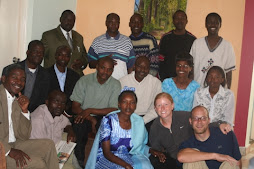
One of the highlights of the week was meeting with all of the CTM Network pastors/leaders. Several of them just graduated from a local urban leadership program. We enjoyed the opportunity to celebrate with them in their hard work. It was great to sit in a circle of leaders that have lived their call in commitment to their respective communities. Many of them have had opportunities to “move up” and “out” of the informal settlements but have remained committed to their people. What an admirable and courageous undertaking!


The week of Amoeba would have been complete without the Nairobi 10km! Our week of training leading up to the consisted of walking up the stairs, to the kiosk markets for a Sprite and several trips to the restroom. To our benefit, there were a few glitches in the race that made things a bit easier on our end. The race had a great turnout...about 12,000 runners...most of whom were a bit discouraged by the end of the day. The course for the 10k was an out and back that led us through the finish line within 5-6km. There was no one telling us at that point that we needed to continue through and do an additional lap in the other direction. 90% of the people (including Mandy, Gideon and myself) stopped, walked around a bit in confusion, got a cup of water and then...realized that there was another lap to do. So...we turned up the throttle a bit and finished the last lap of the race. Walking away from the finish line the 2nd time, I looked at my watch and learned that I had just completed a 10km in 33 minutes! The excitement was killed a second later when I realized that there is no way that I was running 5:20 miles. The well deserved buzz from the front runners reamed the race organizers for a poorly managed race. Not to mention, the prize money that was compromised. All mistakes aside, it was a great run and the shirts are great!


Tuesday, October 23, 2007

The Voice of the Children...

The “voice” of the children...

Thursday:
Last week, we spent some time at the “Inspiration Center” in Mathare, a slum on the east side of Nairobi. We walked around the area for a couple of hours, ate a delicious lunch in a local hotel (restaurant) and visited the largest school in the slum. It was one of those days when I wished that I could have come home, sat in the electric recliner, read the newspaper and drank a nice cold Black Butte Porter. My exhaustion didn't come as a result of our 5 km walk, nor the scorching sun, but the marathon that my mind completed that day.

It all started when we stepped foot off of the matatu and were greeted by the “How are Yoooouuuuuu!” screams from the nearby children. They don't require a response, just a validation of their limited English vocabulary. If you ever want to boost your ego, this is the place to be as a simple touch of the white skin puts you in Santa's league. The first question that I had to ask myself was, “why in the world are these kids not in school?” With the current presidential elections, politicians are tauting their implementation of free primary school for all kids. Apparently “all” no longer includes a huge chunk of the population under 12 years of age in Mathare.

Moments later, we began walking through the community just to get a simple lay of the land. The feel was starkly different than any of the other slums that we had visited. On our 90 minute walk, I saw 3 churches, two schools, one public restroom and 2 vehicles. Mathare is situated in a valley, so the opportunity for roads is limited but the lack of services was just disheartening. Where are the small, microfinance projects? The churches? The Non Government Organizations (NGO's)? The government? With all do respect for those that are doing things in other needy areas of Nairobi, did this community fall off the map? The walk gave us a pulse for the community...a pulse that was strong yet slightly hardened as there were very few units on standby for any type of resuscitation.

An afternoon walk to the largest school in the area gave us a glimpse of the realities of life in Mathare. Leaders of the Inspiration Center estimated that 700 kids attend the school sitting in the heart of Mathare Valley. In terms of Physical space, I would estimate that the facilities were 150 feet by 200 feet. For those of you that are voting on levy's for school renovations think about trying to pass the construction of buildings like these. We visited several of the classes where kids sang us a song, recited a Bible verse and /or a social issue chant and laughed at us as we stumbled through introductions in Swahili. The walls between the classrooms vary from tin to bed sheets as 40-50 students cram onto the benches with their notebooks. A side note: some of the best schools in all of Kenya are located in the slums as these are the kids that are extremely motivated to surpass societal expectations.

I was reminded of a book whose title I can't remember that was written by a friend and colleague of my brother and sister-in-law in New Mexico. The author, Tim Stewart-posed a question around children being labeled “at-risk”. In short, he asked whether there are any kids in this world that are not at risk of some type of failure. If there is any community that I would label as a haven for producing “at risk” kids, Mathare is it. Yet, under the dirt, the crowded conditions and few services, these kids are survivors. They are determined, have an amazing instinct and can navigate systems with the best of them...while the kids across the way at the embassy school, with everything that they could ever ask for and more may be the ones that are “at risk”.

We will be back at this school again. There was something that was warm, inviting and cozy about it even in the scorching heat. Behind the voices of these children was a source of hope and promise...one that I am “at risk” of missing.

Friday
Following our Swahili lesson on Friday, we joined Pastor Alfred in a community call Kawangware on the west side of the city. He took us to a church which functions as a school during the week and introduced us to the kids. There are 37 kids that attend the one room school ranging from age 3-10. Teachers out there...count your blessings as curriculum development and classroom management for a group like this cannot be a simple task. As the norm here, Mandy was asked to lead a PE lesson on the spot. Given the circumstances of no equipment, a language barrier and getting 3-10 year olds on the same page, she rocked it! These kids pay about $4.00/month to attend the school so that the teacher can be compensated. They are hoping to set up a food program as well so that the kids can have a meal at school. Lunchables, cafeterias and leftovers are not the norm in these parts of the city.

Soon, we gathered for lunch at Alfred's house with his family. 6 people living in a 10 foot by 12 foot space. We got cozy on the couch and enjoyed some Ugali, potatoes and beans followed by two rounds of chai. As guests, you never go hungry here! Shortly after lunch, we saw a girl pass by outside. Alfred mentioned that she is deaf. We explained that Mandy took American Sign Language and that we might be able to communicate with her.

We soon learned that Ruth was 9 years old and was born deaf. She has never been to school, only recently learned how to finger spell and has a very difficult time interacting with her family. Can you fathom what it would be like to not be able to communicate for 9 years? I am sure that she has been able to express herself in some ways, there is no such thing as a Disabilities Act over here, nor are there accessible resources for those that don't fit the norm. Mandy taught Ruth and her father a few signs. We will meet with her family again this week or next to see if we can help arrange for them to enroll her in a school and/or find some resources for them.

When I think about the life of a child in Kenya (I guess anywhere for that matter), the voice plays such a crucial role in discovering yourself and your surroundings. It's a ticket to asking questions, to picking up on social cues and to sharing who you are with the rest of the world. There are no “How are yooouuuu?”s from Ruth. No crammed classrooms with 40-50 kids listening intently to their teachers. No songs...just a glance of curiosity toward her surroundings...for now at least. We'll keep you posted.


Sunday
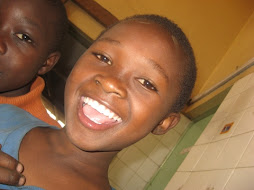
There is something so beautiful and authentic about a child in song...I have to share a brief story about a little boy names Moses at the Inspiration Center on Sunday. This little guy was a true gift to us. He couldn't have been more than three years old, standing at a proud 30 inches and a smile that pierced through the oppression outside. Moses was one of about 50 kids at a church service of 70 people. Kids galore! When he came into the room, he ran up to me trying to see what mzungu (white person) skin feels like. He ran over and just grabbed my hand, gave me a high five and then just looked up at me. I had a hard time figuring out who he was looking at early on as his head was facing one way and his eyes another...come to find out-my little man Moses is cross eyed. That didn't stop him from giving some wicked high 5's, climbing up onto my lap during the church service and dancing in the aisles during worship time.

I didn't hear many words from Moses, but his actions spoke louder than any keynote speaker that I have heard. He didn't hold back...but instead used his “voice” to welcome us, to make us comfortable and to show what it means to be authentic in the presence of others...particularly in the context of church...where we often feel stifled.

Moses did something for me that day that will help guide my time here in Nairobi. He gave me eyes to see and ears to listen to a Psalm from David that touched me in that place at that moment. His toothless smile, intersecting eyes and weathered clothes helped me articulate a Psalm that is emerging in my mind...although there are many stanzas to this Psalm of Nairobi, this speaks to the context in which I met my little friend.

“To the One who remembered us in our low estate,
His love endures forever.” Psalm 136: 23.

To the Inspiration Center and the communal cross that it carries,
His love endures forever.
To the waves of dung wisping from the neglected toilets below,
His love endures forever.
To the children entering with calloused feet and ugly sweaters,
His love endures forever.
To the little boy whose crossed eyes do not make him blind to worshipful dancing,
His love endures forever.
To the valley below, where moonshine is prepared to intoxicate the city,
His love endures forever.
To the Nissan vans lined up on the street, their bumping systems and careless drivers,
His love endures forever.
To the mother behind me who sits in tension of giving an offering or eating a meal,
His love endures forever.
To the Mark and Moses, who choose to cry with the city instead of for it,
His love endures forever.
To the pastor down the street striking a deal to buy a helicopter,
His love endures forever.
To the landlord, who has not provided electricity for months,
His love endures forever.
To me, who can leave at anytime, and not come back,
His love endures forever.
To the millions of people in Nairobi, dreaming of a better life,
His love endures forever.
To campaigning politicians, soliciting slum votes soon to abandon them,
His love endures forever.
To the drugged rapper meters away whose bitterness prevails in his psalms,
His love endures forever.
To the churches and NGO's who have neglected this community,
His love endures forever.
To you, the reader who has faithfully supported us in this journey,
His love endures forever.
To Mathare,
His love endures forever.
Monday, October 22, 2007

The Weaker Parts

I read a devotion yesterday by Henri Nouwen that spoke straight to my heart as if God himself was speaking to me. I love it when I come across a scripture or reading and it speaks to exactly how I am feeling and it captures an emotion or thought that I would never be able to find the words to describe it. I pray that as you read it, it would speak to your heart as well. I feel like because I am walking in some of the poorest neighborhoods in Nairobi, it is very easy to find a context for this text for myself...I want to ask you to think about the community in which you find yourself, who is it speaking about for you? If we are truly members of one body, what are we doing to protect the weaker parts?

“The most honored parts of the body are not the head or the hands, which lead and control. The most important parts are the least presentable parts. That's the mystery of the Church. As a people called out of oppression to freedom, we must recognize that it is the weakest among us- the elderly, the small children, the handicapped, the mentally ill, the hungry and sick- who form the real center. Paul says, “It is the parts of the body which we consider least dignified that we surround with the greatest dignity.” (1 Corinthians 12:23)
The Church as the people of God can truly embody the living Christ among us only when the poor remain its most treasured part. Care for the poor, therefore, is much more than Christian charity. It is the essence of being the body of Christ.”

Joel and I are here on behalf of Center for Transforming Mission. I am convinced that if the Church, the body of Christ, lived in such a way that we treasured our 'weakest' parts, there would be true transformation. I guess another way to ask the question is: “If we (The church: those who claim to be made in the image of God and to be living for Him) are not considering these weaker members with the greatest dignity, then who will?

Peace,
Mandy

Wednesday, October 17, 2007

The race is on...

Kibaki, Hillary, Raila, Guliani, Obama...politics is heating up all over the world! The beginning of a new era is emerging. Kenya, United States, Zimbabwe (who desperately needs some good leadership)...global politics is fascinating. First things first, what an embarrassment to be corrected by Kenyans in the polls on the American Presidential front runners. Part of their interest stems from Barrack Obama's ties to Kenya, while the rest is due to the US's influence in politics that govern the world. A lot is at stake. Fearful that my opinion may get away of what I really want to share, I am going to shift over to painting a rough sketch of kenyan politics at its finest. First, a few simple observations:
-I would guess that 70% of the televised news has to do with the elections at this point. Another 10% goes to soccer followed by a bit of local news. We joke that the stations will have no news broadcasts after the elections are over.
-Newspapers are sold on the sides of the road at market stands. Every morning, when a new issue comes out, there are 5-15 people gathered around each newspaper to learn or the latest election news. We have not seen any newspapers without election news on the front page. Everyone is interested...young, old, male, female, white collar, no collar-everyone.
-60% of Nairobi's 4.5 million people live in informal settlements (slums). While there are some exceptions, the vast majority of these people are living in financial poverty...I will clarify “financial poverty” at some other point. As you can imagine, $1000/plate fundraising lunches are not the norm in this neck of the woods. No candidate will stand a chance without appealing to the majority of his/her people living in the slums of Nairobi.
-Although there are 150-200 parties running for president, two main parties have emerged...PNU (People's National Unity-which was created about 3 weeks ago built around the current president) and ODM (the Orange Democratic Movement which was developed to encourage change and the formation of democracy in Kenya's political system).
-Rather than red states and blue states in Kenya, there is an issue around tribalism. Because Kenyan culture is rooted in place and community, people vote for leaders based on where they are from, which tribe they are a part of and who they associate with. This issue is evolveing quickly as people continue to move into cities permanently.
-The current president has the final say in when the elections will be held. There is an obligation to hold the elections prior to January 1, 2008 but if it would be advantageous to hold the elections earlier, the current president has the power to do so.
-The poles as of Saturday, October 13: Kibaki (PNU-current president) 37%, Raila (ODM) 53% and Musyoka (Another ODM Candidate) 9%

As of now, the time leading up to the elections has been peaceful. We hope and pray that this will continue as historically this has not the case.