Saturday, December 8, 2007
Ode to Boyye
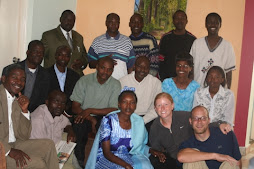
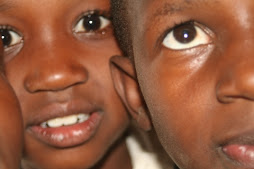
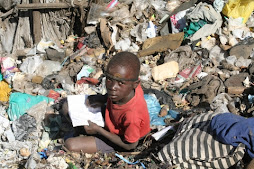
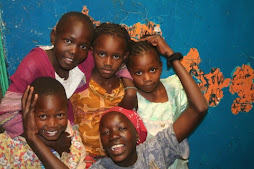
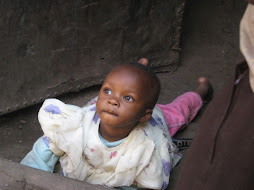
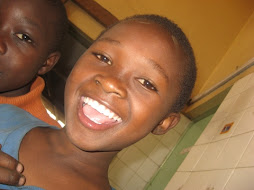
These are pictures taken by a friend of ours from Mathare. Boyye, whose father past away this month is 19 years old, has grown up in Mathare and now shares a piece of who he is with the children of the Inspiration Center. This is his first time behind the viewfinder portraying a few glimpses of our World AIDS Day event through his lenses. Enjoy!


Wednesday, December 5, 2007
More to come....soon!
Needless to say, having visitors around makes things a bit more busy. A few highlights since the last time that we posted:
Visiting Dagoretti 4 Kids, a youth program aimed at street kids in one of the many hard places around Nairobi. We were incredibly impressed with their organization, their thoughtful planning and the commitment that they have shown to their own backyard community. Check out their website at dagoretti4kids.org.
Joining the Seattle crew for a delicious dinner at the infamous Carnivore Restaurant. It was great to see people from home, to be reminded of seeing Kenya for the first time again and catch up on happenings in the NW. Thank you for allowing us to be a part of your team.
Welcoming Andy Guinn (PLU) and his friend Bryce to lovely Nairobi for the weekend. We weren't sure if it would work out to get together during Andy's semester abroad in Dar e Selaam, but we pulled it off. Thanks for making the trek guys. We shared a bit of our experience with them by spending time with friends in Mathare, playing some ultimate frisbee, eating delicious Ethiopian, Indian and Kenyan food and playing a few rounds of cards!
World AIDS Day event in Mathare...see AIDS and Advent
Joel's first shot at preaching in a church service...Since arriving in Kenya, we have been approached by many of the pastors to share in their churches. We explain that we are not pastors, that we have utmost respect for them and their work and see ourselves best supporting their work in other ways. This usually is followed up by, “When will you preach to us?”. So, Joel gave it a shot...it was much too short for their liking (Much to long for Joel's) but people seemed to be remotely interested and it went pretty well. Having a translator mimicking everything said is a bit distracting!
Our first bed bug epidemic-Not sure where they came from...but we have the bites all over our bodies to remind us that they are around. Itch, itch itch.
Christmas Celebration with the pastors: Last week, we met with the pastors and their spouses for a Christmas breakfast. Many of them will take off for the holidays to visit friends and family in their hometowns. French toast, Mandozi and fruit was the food of choice.
We will write more soon but wanted to let you know that all is well, the week has been busy and that life in Nairobi is picking up before the holiday and election lull.
Saturday, November 24, 2007
One step deeper...
For the past two months, Mandy and I have seen, touched, heard, smelled, laughed, cried and even pooped the molecules of life in the slums of Nairobi. At times, we have found ourselves building an immunity to the beauty and affliction while other moments provoke the inevitable gulping contraction of the throat. There are many estimates out there on how many people live in the 170 slums of Nairobi, the most common exceeding 2,000,000. We have come to wonder where all of these people come from, the stories that frame their existence and the journeys that they have embarked on.
This week, I had an opportunity to join a group of people a group from Seattle through World Concern (a development non-profit out of Seattle who is doing some great work www.worldconcern.org) for a visit to Narok, a Maasai area in southwest Kenya. It was here that I was confronted with the realities of many of the people living in rural villages throughout Kenya, the adjustment that they must face when journeying to a city of 4 million and the beautiful people and place that they temporarily (or perhaps forever) abandon. Life outside of the most developed city in East Africa is different to say the least. My first day in Narok brought me back to September 7, when we landed at Nairobi's airport. With little confidence in language, a paralyzing mindset to be culturally sensitive while attempting to manage my senses and the life of the Maasai took its toll.
Perhaps the picture can best be painted through the story of a man named Peter.
Peter grew up in traditional Maasai culture. No electricity, no water, one father, many mothers, hundreds of cows and goats, no education, perplexity at the sight of a car and calloused feet from his miles explored each day. His mother was the first wife, feeling robbed of sharing her family and resources with others. Maa was the language of choice in and among his people while his land was similar to the most remote places of Nevada, New Mexico and Utah as his people were confined to barren areas by the colonizers. (sound familiar?) I hate to use the word primitive as it implies that society has advanced through industrialization and technology, (What has it advanced toward?) but it is the only word in my mind to adequately describe the live of rural villagers in Kenya.
Imagine life without plastic, with life possessions on one shelf and under the cow hide bed, being trapped in a carbon monoxide dungeon every day with a cooking fire inside of a windowless hut and never really seeing or needing access to money.
At the age of 12, Peter was told by his father to take over the foraging goats on a graze in quest of food and water. These journeys are ongoing, spanning across the region and often led solo or with a pair of Maasai boys. Days or perhaps weeks into his journey, he did what most 12 year olds would do, fell asleep and lost the herd of goats. Upon waking up, they were nowhere to be found. Even though he could see miles across the desert landscape, his goats were gone. He returned home to tell his father of his careless mistake. Needless to say, his father was incredibly upset.
Ironically, a few weeks later, the police came to the village and mentioned that there were a few openings in a boarding school near Nairobi. Convinced that his son was a shame to the tribe, Peter's father sent his son with the police with few reservations. This was the beginning of Peter's educational journey through primary school, secondary school and eventually university. Unfortunately, Peter's siblings were strong herdsman, warriors and sought-out girls and women bound for marriage and never had the opportunity to be punished by being sent to school.
I am not sure how the next steps panned out in Peter's life, but know that he is now back in his community, eventually accepted by his family and tribe and working with orphans and vulnerable children in rural areas. I was most intrigued by what the car ride must have been like for him as he entered into Nairobi for the first time, seeing multilevel buildings, at abundance of produce at stands lining the streets, traffic jams, brick walls around homes, watchman, restaurants and car alarms.
It is no wonder that many people end up in the slums. While I realize that this is not the path of a good chunk of the 2,000,000 people living in nearly inhumane conditions, at some point in time, families moved to the city in search for a better life. Life better than Kibera, Mathare, Kawangware and Lunga Lunga. Perhaps there is comfort in being surrounded by those who have experienced the same contrast, by those who have lost their goats and by those who were punished by a trip to the city.
Thursday, November 22, 2007
Gobble, Gobble!
Hello friends and family!
Just want to wish you all a WONDERFUL Thanksgiving! We hope that is a time of being surrounded by loved ones and allowing you to ponder the many blessings in your lives. We have thought of all of you today and are so thankful to be surrounded from 'afar' :)
It is hard for us to believe that the holiday season is officially here, as it was warm and sunny this afternoon here.
Happy Thanksgiving!
Just want to wish you all a WONDERFUL Thanksgiving! We hope that is a time of being surrounded by loved ones and allowing you to ponder the many blessings in your lives. We have thought of all of you today and are so thankful to be surrounded from 'afar' :)
It is hard for us to believe that the holiday season is officially here, as it was warm and sunny this afternoon here.
Happy Thanksgiving!
Tuesday, November 20, 2007
Spiritual Trauma
I volunteered to go to the church, I will give you that... but after that moment my consent for what happened stopped and I thus became the victim. Joel and I attended a church that one of our friends invited us to. It sounded refreshing to go to a church where we could just sit in the congregation and enjoy the morning without needing to 'represent an organization.' The church is ran by a Korean Mission Group and thus had a Korean pastor. The message was first translated into English and then again into Swahili. It was quite a linguistic experience! Yet, one and half hours later, he was still preaching and not even close to being done...even though I'd say 90% of the congregation had already checked out.
When the service finally completed, they asked for the first timers to move to the back to be welcomed. I should have listened to the inner voice saying, 'now is your chance to escape...' but that would be rude, so I headed to the back, unaware of the trauma I was about to encounter. Our group of newcomers was split into several smaller groups and I was sent with the man with a mission, Pastor Lee. Pastor Lee is a 50+ year old Asian man with a hearing problem, broken English, and the eagerness to save souls. What was meant to be at the most a thirty minute, 'welcome to our church' schpeel, turned into a very harmful encounter with the Christian faith. Pastor Lee began by learning our names, of which I'm sure he doesn't remember, and then proceeded with his “mission” of bringing us to Jesus without any further inquiry into what we believed and why we were in Kenya, and it still wasn't enough to explain to him that we believe in Jesus. He diligently continued on taking us through many familiar scriptures of the Bible...the Roman Road, and the fall of man, etc... exerting his beliefs unto us like a criminal who can overpower his victims, refusing to read the obvious cues that he was offending us. Oh the anger and hurt that was welling up within me as he continued on and on, often times refusing us the opportunity to speak because 'he wasn't done yet.' To disagree with what he was saying would only lead to further abuse, so in time I simply succumb to the despair I felt and stopped fighting it.
What could have been a wonderful and engaging conversation quickly turned sour and ended in a direct abuse of power. To think that this may be a person's first experience with Christianity nearly brought tears to my eyes in the midst of him talking to us. Without any attempt to build even a casual relationship, this man forced us into a conversation that we were obviously resistant to having. Not to mention the fact that we expressed our belief in Christ from the very beginning.
An hour after the conversation began, he was still pursuing us and even had the nerve to express interest in seeing us again, which would be like an attacker asking his victim out to coffee after stripping away their dignity. With the tiny amount of strength (and yet restraint) we had left in us, we politely stood up, thanked him, and walked away. He followed, requesting our contact, and I ignored him. I have never felt so rude in my life, and yet I wish I would have walked away much sooner.
I felt demoralized spiritually on Sunday. The man may have had good and honest intentions, but I walked away deeply paining for people who have had similar encounters.
An invitation into the Christian faith should NEVER feel like this. There is no “3 step formula” that opens the eyes of people to see Jesus, it is His doing within our hearts. To think that we as humans have the ability to convince people into the faith is a disgrace. I apologize for the graphic metaphor, yet I can't think of a better way to explain the experience, which only reinforced to me the utmost importance of building relationships with people and sharing your faith out of love, not a formula.
Peace,
Mandy
When the service finally completed, they asked for the first timers to move to the back to be welcomed. I should have listened to the inner voice saying, 'now is your chance to escape...' but that would be rude, so I headed to the back, unaware of the trauma I was about to encounter. Our group of newcomers was split into several smaller groups and I was sent with the man with a mission, Pastor Lee. Pastor Lee is a 50+ year old Asian man with a hearing problem, broken English, and the eagerness to save souls. What was meant to be at the most a thirty minute, 'welcome to our church' schpeel, turned into a very harmful encounter with the Christian faith. Pastor Lee began by learning our names, of which I'm sure he doesn't remember, and then proceeded with his “mission” of bringing us to Jesus without any further inquiry into what we believed and why we were in Kenya, and it still wasn't enough to explain to him that we believe in Jesus. He diligently continued on taking us through many familiar scriptures of the Bible...the Roman Road, and the fall of man, etc... exerting his beliefs unto us like a criminal who can overpower his victims, refusing to read the obvious cues that he was offending us. Oh the anger and hurt that was welling up within me as he continued on and on, often times refusing us the opportunity to speak because 'he wasn't done yet.' To disagree with what he was saying would only lead to further abuse, so in time I simply succumb to the despair I felt and stopped fighting it.
What could have been a wonderful and engaging conversation quickly turned sour and ended in a direct abuse of power. To think that this may be a person's first experience with Christianity nearly brought tears to my eyes in the midst of him talking to us. Without any attempt to build even a casual relationship, this man forced us into a conversation that we were obviously resistant to having. Not to mention the fact that we expressed our belief in Christ from the very beginning.
An hour after the conversation began, he was still pursuing us and even had the nerve to express interest in seeing us again, which would be like an attacker asking his victim out to coffee after stripping away their dignity. With the tiny amount of strength (and yet restraint) we had left in us, we politely stood up, thanked him, and walked away. He followed, requesting our contact, and I ignored him. I have never felt so rude in my life, and yet I wish I would have walked away much sooner.
I felt demoralized spiritually on Sunday. The man may have had good and honest intentions, but I walked away deeply paining for people who have had similar encounters.
An invitation into the Christian faith should NEVER feel like this. There is no “3 step formula” that opens the eyes of people to see Jesus, it is His doing within our hearts. To think that we as humans have the ability to convince people into the faith is a disgrace. I apologize for the graphic metaphor, yet I can't think of a better way to explain the experience, which only reinforced to me the utmost importance of building relationships with people and sharing your faith out of love, not a formula.
Peace,
Mandy
Tuesday, November 13, 2007
Sunday...
Sunday morning, I trekked down the street to Pastor Esau's church in Kibera. The streets were full, the sun shining and energy was in the air. Unfortunately, I flew solo today as Mandy stayed behind and dealt with an upset stomach.
Four hours later, I returned home hungry and exhausted.
Four hours of interpreting pieces of Swahili, watching those around me, deciphering scripture, explaining my presence, singing and day dreaming. It made me think a great deal about the church (or any other social structure for that matter) and what it means to enter in for the first time. While familiarity allows us to relax and be comfortable, entering unknown territories has the opposite effect. I was literally exhausted by the end of it all. It made me think about what it takes to practice inclusion, to create a gracious space where all are not only welcome, but comfortable to be who they are. I thought of the international students at PLU, the visitors that walked into Trinity for the first time or even the first day on a job.
What do you do to create an environment that allows one to be himself? When do I think about the needs of the outsider-the individual whose first language, culture and customs are different than the norm?
An hour later, a taxi picked us up and took us to a field where we play ultimate frisbee every week. The grass is green, the players are white, the language is English and on the field, people are who they are. Two and a half hours of running around felt like a nap compared to the morning. I was in my element...well I should note that it is an element that is quite new. As of six weeks ago, I had never played ultimate frisbee and felt the pressure of stepping into the unknown. I wasn't an outsider this time around, nor did I feel the need to pick up on everything that was going on around me, but instead-just to be present.
The contrasts of these two parts of my day made me think a great deal about “diversity”. For a split second, it made me question some of my previous thoughts on inclusion. It made me wonder if diversity is a term that people strive for to be politically correct. Maybe it is OK to have black communities, white communities, schools and churches. What is wrong with me not wanting to be exhausted by a church service by making it “diverse”? What is wrong with me feeling more comfortable around the UN, USAID, and embassy workers on a field than those speaking fluent Swahili?
Peeling back one more layer, I see a few flaws in my theory:
1.Diversity is not just about sitting together, but about understanding one another. I think that is why my Sunday experience was so tiring-I have a lot to learn in order to understand the people of Kibera. Understanding people is no different than understanding any other complex subject. It takes time, work, energy, failure and constant attention.
2.I have to be extremely careful with what is really at stake with diversity. I get sick of the term because it tends to be a light and fluffy idealistic word for inclusion when its actual roots are formed in oppression and injustice. Is it possible that my discomfort is actually result of dealing with the past and the present, the forms of injustice and oppression that have occurred and continue to occur? That is an exhausting thought in itself. I can't just dodge it all together.
3.What if I never stepped foot in a church that made me uncomfortable? What if I never took any college courses that challenged me? What if I never took the time to hear the story whose life is drastically different from my own? Who would I be? Who would they be? What if everyone took this approach? What would our world look like?
The night ended with a tasty sandwich and playing cards with friends. It took me to a place that was comfortable, allowing me into a space where I could make sense of my day, my desire for comfort, my contributions to the whole diversity debate and what it means to be a white, male in the streets of Nairobi...once again-I am tired.
Four hours later, I returned home hungry and exhausted.
Four hours of interpreting pieces of Swahili, watching those around me, deciphering scripture, explaining my presence, singing and day dreaming. It made me think a great deal about the church (or any other social structure for that matter) and what it means to enter in for the first time. While familiarity allows us to relax and be comfortable, entering unknown territories has the opposite effect. I was literally exhausted by the end of it all. It made me think about what it takes to practice inclusion, to create a gracious space where all are not only welcome, but comfortable to be who they are. I thought of the international students at PLU, the visitors that walked into Trinity for the first time or even the first day on a job.
What do you do to create an environment that allows one to be himself? When do I think about the needs of the outsider-the individual whose first language, culture and customs are different than the norm?
An hour later, a taxi picked us up and took us to a field where we play ultimate frisbee every week. The grass is green, the players are white, the language is English and on the field, people are who they are. Two and a half hours of running around felt like a nap compared to the morning. I was in my element...well I should note that it is an element that is quite new. As of six weeks ago, I had never played ultimate frisbee and felt the pressure of stepping into the unknown. I wasn't an outsider this time around, nor did I feel the need to pick up on everything that was going on around me, but instead-just to be present.
The contrasts of these two parts of my day made me think a great deal about “diversity”. For a split second, it made me question some of my previous thoughts on inclusion. It made me wonder if diversity is a term that people strive for to be politically correct. Maybe it is OK to have black communities, white communities, schools and churches. What is wrong with me not wanting to be exhausted by a church service by making it “diverse”? What is wrong with me feeling more comfortable around the UN, USAID, and embassy workers on a field than those speaking fluent Swahili?
Peeling back one more layer, I see a few flaws in my theory:
1.Diversity is not just about sitting together, but about understanding one another. I think that is why my Sunday experience was so tiring-I have a lot to learn in order to understand the people of Kibera. Understanding people is no different than understanding any other complex subject. It takes time, work, energy, failure and constant attention.
2.I have to be extremely careful with what is really at stake with diversity. I get sick of the term because it tends to be a light and fluffy idealistic word for inclusion when its actual roots are formed in oppression and injustice. Is it possible that my discomfort is actually result of dealing with the past and the present, the forms of injustice and oppression that have occurred and continue to occur? That is an exhausting thought in itself. I can't just dodge it all together.
3.What if I never stepped foot in a church that made me uncomfortable? What if I never took any college courses that challenged me? What if I never took the time to hear the story whose life is drastically different from my own? Who would I be? Who would they be? What if everyone took this approach? What would our world look like?
The night ended with a tasty sandwich and playing cards with friends. It took me to a place that was comfortable, allowing me into a space where I could make sense of my day, my desire for comfort, my contributions to the whole diversity debate and what it means to be a white, male in the streets of Nairobi...once again-I am tired.
Saturday, November 10, 2007
Subscribe to:
Posts (Atom)